


Meal-Level Modulation in Metabolic Care Settings
Structured, non-systemic metabolic support designed for defined patient profiles and care phases.
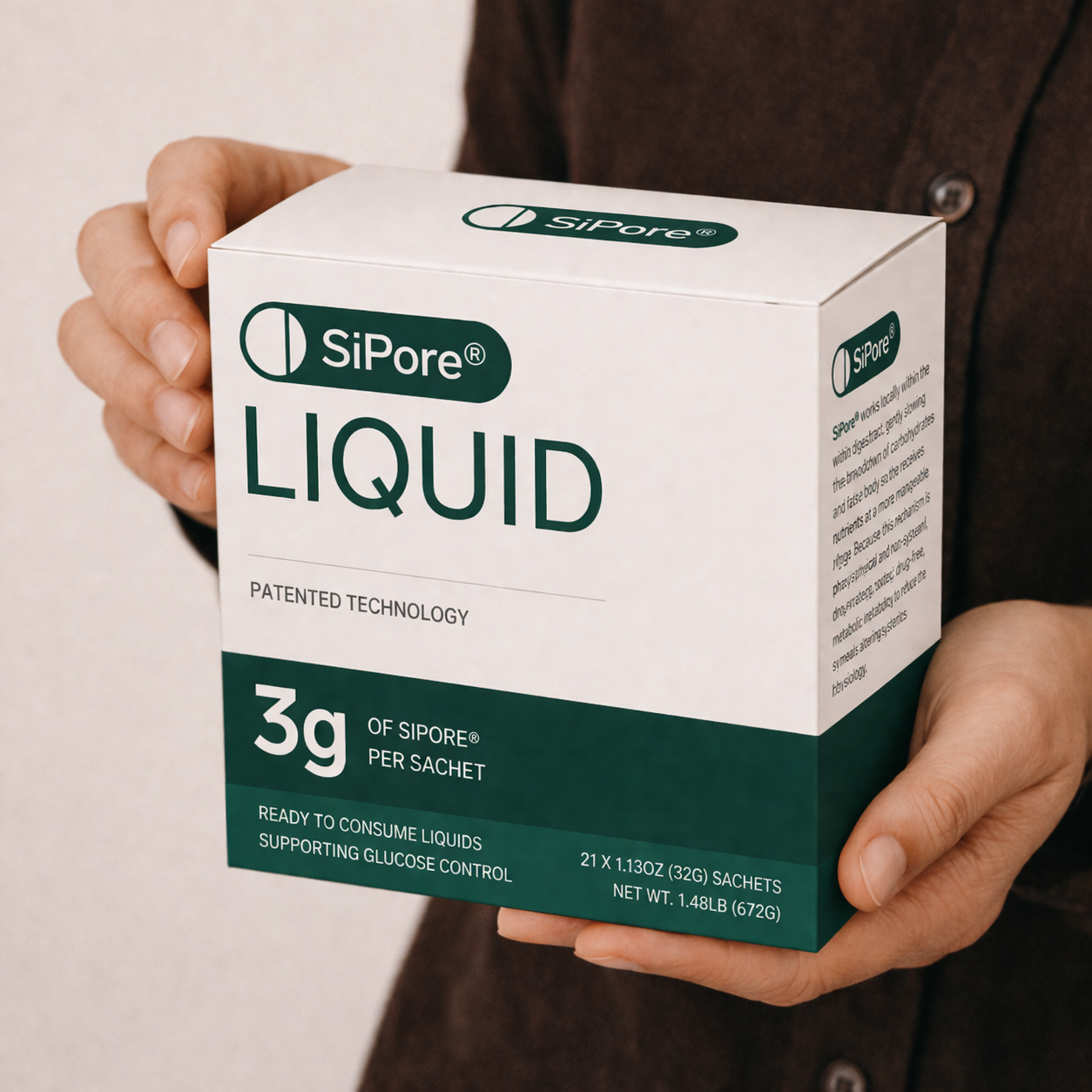
SIGRID’s products, powered by patented SiPore® technology, can be incorporated into structured metabolic nutrition workflows across weight management, glycemic balance, hormonal transitions, and long-term metabolic stability.
These structured use frameworks are designed to complement lifestyle strategies and, where relevant, physician-directed care plans.
A Structured Practice Framework
All structured use cases follow a consistent framework built around patient phenotype, care phase, and metabolic objective.
Identify the Patient Profile
Defined metabolic phenotype such as central adiposity, post-meal glucose variability, GLP-1 taper, or hormone-related instability.
Implement Structured Meal-Level Modulation
Targeted post-meal support during defined care windows, typically 3–6 months.
Transition to Maintenance
Lower-frequency use or shift to lighter daily support depending on patient goals and stability.
Primary Protocols
Five targeted protocols to support metabolic health, weight management, and long-term vitality





Designed for Practice Integration
Structured use frameworks are designed to fit within standard consultation cadence.
Step 1 – Assessment
Identify metabolic phenotype, appetite pattern, and post-meal variability.
Step 2 – Structured Use Phase
Defined use window, typically 3–6 months depending on patient profile and goals.
Step 3 – Monitoring
Track waist circumference, appetite patterns, post-meal variability, and energy stability.
Step 4 – Maintenance or Transition
Reduce frequency or shift to lighter daily support once stability is achieved.
Full Structured Protocols Available to Registered Practitioners
Detailed frameworks include:
- Dosing and duration guidance
- Escalation and step-down pathways
- Monitoring frameworks
- Lifestyle integration recommendations
- Patient selection criteria
- Scientific rationale and evidence mapping
Access is granted through the Early Access Program.
Mechanism-Led. Scientifically Evaluated. Structurally Applied.
Clinical evaluations of the SiPore® technology have shown:
- Mechanistic enzyme modulation in the small intestine
- Demonstrated reduction in post-prandial glucose spikes
- Evaluated metabolic markers in controlled studies
- Favorable safety and tolerability profile
- Fat loss with lean-mass preservation
Explore full scientific validation on the Science page.
